

By Len Warren, Volunteer Board Member
Along the Amargosa River, I lead many bird walks. Often, someone will ask me, “What’s your favorite bird?”
Years ago, I would just say that I didn’t have one, that they were all equally interesting. I felt quite scientific, and obligated to treat them all equally.
Over time, I’ve learned that having a favorite bird is much more interesting to those who decide to attend one of my events.
Now, I simply answer immediately, “Phainopepla!”
Phainopepla is a cool word to say, and to spell. They are quite common and easily seen. Shiny black males and light battleship - gray females, both with bright red eyes, and a prominent crest, are easily seen high perching, or “flagging”, atop local mesquite trees. Many a slow bird walk has been saved by a few Phainopepla showing off while I told their story to my bird walkers.
Out of 10,000 bird species on our planet, only Phainopepla is a “dual breeder”. This always prompts the question: “what do you mean by ‘dual breeder?’”
Phainopeplas winter in Honey mesquite or Catclaw acacia habitat areas that also have Desert mistletoe. The berries from mistletoe are their main food source. No mistletoe, no Phainopepla.
They typically breed in February and March. They usually lay two eggs, which is not enough to sustain a population! Their young fledge by late April, and usually by mid-May, all the desert Phainopepla are gone. They migrate to cooler climates at higher elevations, replace mistletoe berries with gooseberries, and currant berries. They then make a new and different type of territory, and breed again.
The Alabama Hills near Lone Pine and Lake Isabella in Kern County, both in California, are nearby examples of where Phainopepla migrate to for their dual breeding. However, there are still many mysteries about where they go and what they do. Maybe you can be the one to find out more.
Princeton University’s Daniel Baldassarre, now an Assistant Professor at SUNY Oswego, captured Phainopepla and tagged them with geo-locators in 2019 and what they learned was fascinating. Read more in the links below.
Take a walk along the Amargosa River to see Phainopepla for yourself close-up!
Citations
https://americanornithology.org/rare-itinerant-breeding-behavior-revealed-in-california-bird/
https://academic.oup.com/auk/article-lookup/doi/10.1093/auk/ukz058.
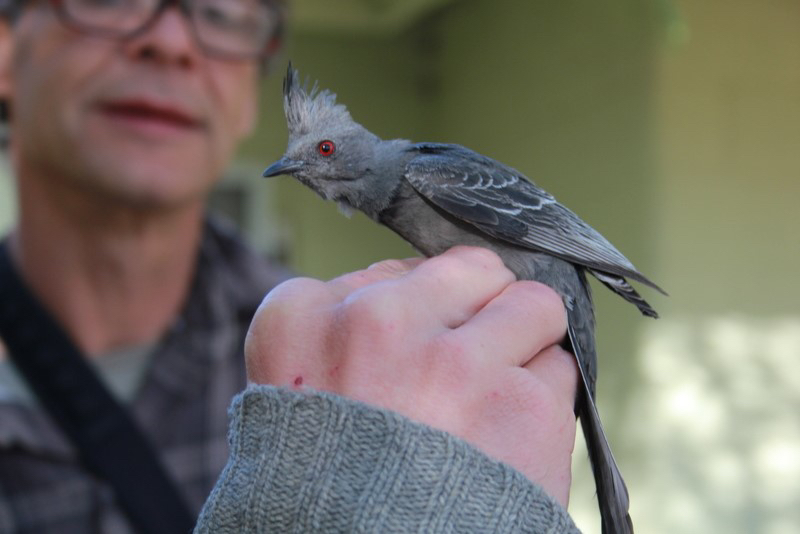
Phainopepla Female
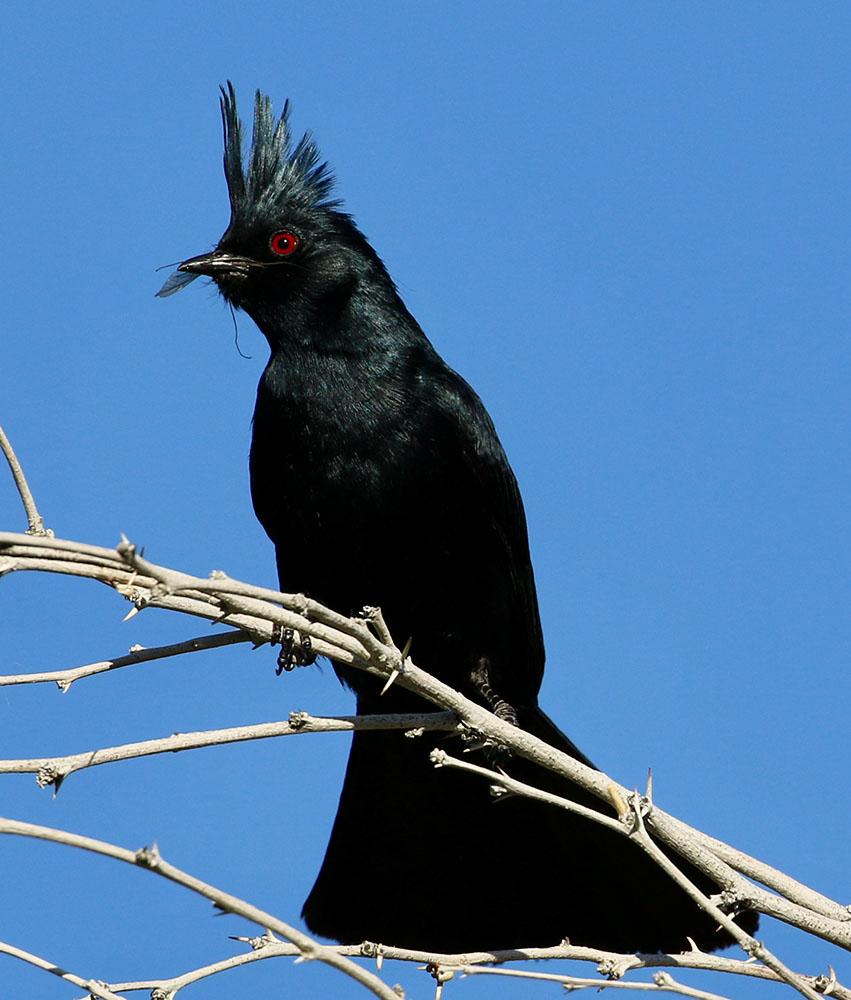
Phainopepla Male
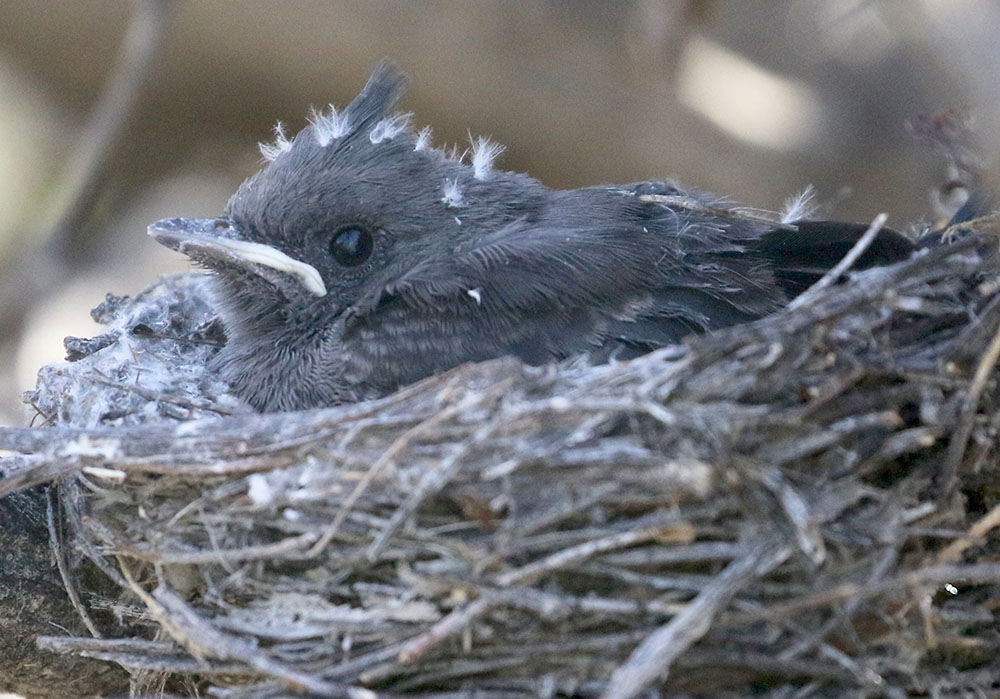
Phainopepla Chick