

By Cameron Mayer
Established in 1996 by Presidential Proclamation, the 1.9 million acre expanse of lush canyons, stark badlands, and other natural landscape features that make up Grand Staircase-Escalante National Monument (GSENM) in southeastern Utah are one of a kind in our public lands system. These lands are cherished by many who recreate on them, contain a variety of important resources, and protect a vital ecosystem. They are also ancestral homelands, with six tribes including: the Hopi Tribe, Navajo Nation, the Kaibab Band of Paiute Indians, the Paiute Indian Tribe of Utah, the Ute Mountain Ute Tribe, and the Zuni Tribe coming together in March of 2025 to form a coalition to advocate for and share crucial knowledge about the lands included in Grand-Staircase-Escalante.
Nevertheless, GSENM has been under siege for years, with a hostile congressional delegation and some state and local leaders battling it out with supportive tribes, conservationists, local businesses, and the overwhelming weight of supportive statewide and national public opinion. President Trump reduced the size of the monument in 2017 by roughly 50%, followed by President Biden restoring it back in 2021. While the current 2nd Trump administration does not appear to be taking aim at the area covered by the designation this time around, opponents in Congress are attempting to make use of a little-known law, called the Congressional Review Act (CRA), to undermine the current management.
The CRA was passed in 1996. It allows for Congress to overturn public agency rules, or regulations, with a simple majority in both chambers. The net result if legislation is passed is that agencies are prevented from issuing a future rule that is “substantially the same” without congressional approval. In the case of GSENM, usage of the CRA is unique because monument management plans have never before been judged to be a “rule” subject to the CRA.
So what happened now? On March 4th, 2026, members of the Utah Congressional delegation, including Senator Mike Lee and Congresswoman Celeste Maloy (UT-2), introduced legislation in both the House and Senate to invalidate the current monument management plan for GSENM. This plan was finalized in January of 2025 after years of public, tribal, and decision-maker input, and is intended to guide balanced access, use, and overall management of the monument for years to come.
Overturning the current management plan for GSENM means chaos for the management of not only national monuments, but all public lands. It is unclear how the area within GSENM would be managed if the current plan is scrapped. This leaves current uses such as OHV use, hunting, camping, protection of cultural sites and sensitive areas, and other important parts of planning in a state of uncertainty. Perhaps most importantly, using the CRA in this way amounts to throwing away years of public input in favor of fast-tracking a top-down decision that leaves no room for fair process, transparency, and public debate.
Currently, the situation remains in motion. No one knows for certain what will happen. It is expected that action will be taken on the legislation by sometime in June, when the window for Congress to act will expire. In the meantime, Friends of the Amargosa Basin is doing our part to defend our national monuments and public lands by signing on to a letter that includes 125 local, state, and national groups calling on leaders in Congress to oppose attacks to Grand Staircase-Escalante National Monument through use of the Congressional Review Act.
Stay tuned for future updates!
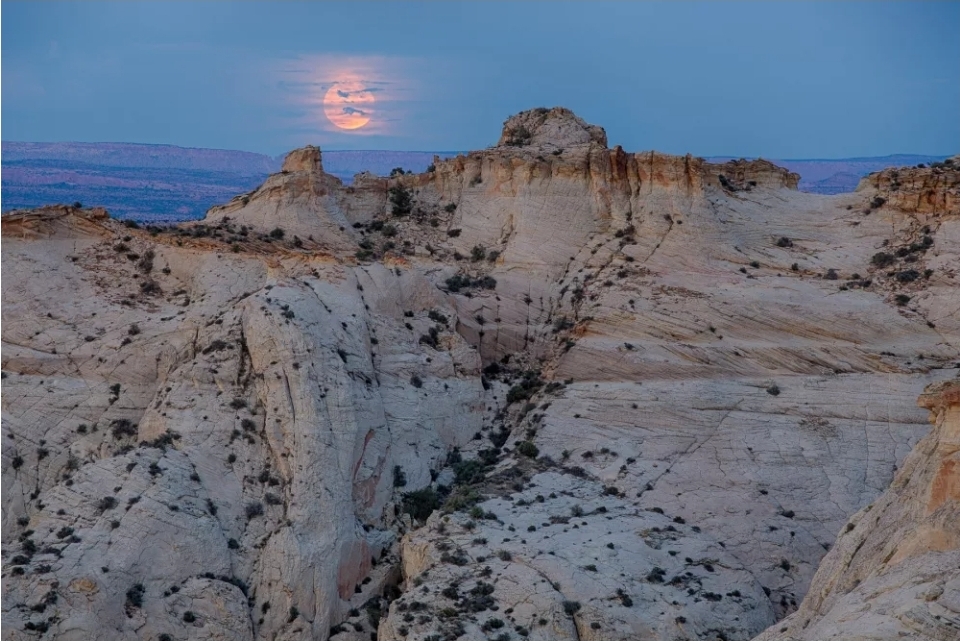
Photo credit to Bob Wick
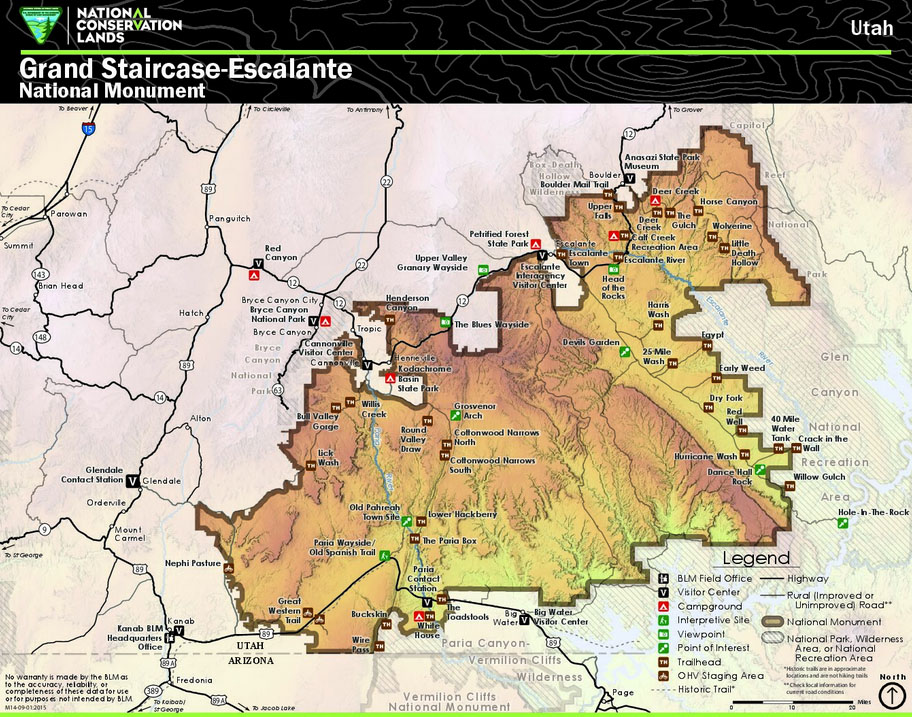
Map credit to Bureau of Land Management