

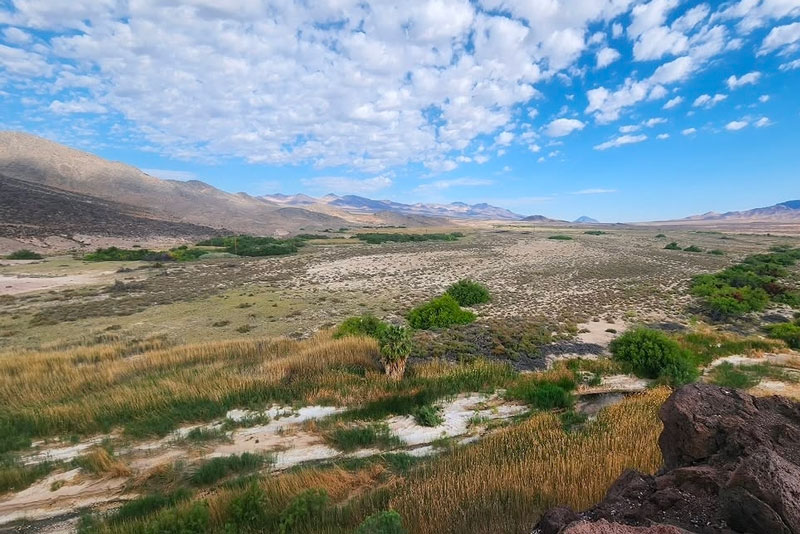
The Amargosa Wild & Scenic River winding its way through Shoshone, CA
By Cameron Mayer, Executive Director
With so much happening at the federal level this past month, this is an update to FAB Friends and supporters regarding a couple of key policy developments impacting our public lands held in trust at the federal level, in particular, lands administered by the Bureau of Land Management (BLM). BLM lands make up the vast majority of land holdings in the Amargosa Basin, making decisions that impact them especially relevant from a big-picture perspective.
This past month saw Steve Pearce confirmed as director of the BLM, as well as the rescission of the Conservation and Landscape Health Rule, widely known as the “Public Lands Rule”. These two events mark a watershed moment for the current direction of public lands management.
Steve Pearce is a former Congressman from New Mexico who served from 2003 to 2009 and again from 2011 to 2019. During his tenure, he repeatedly advocated for the selloff of public lands and the removal of protections from conserved landscapes, such as Organ Mountains-Desert Peaks National Monument in New Mexico. His appointment as the leader of the BLM is akin to a fox guarding the hen house, and it is anticipated that his actions will further a larger goal of a powerful few to undermine effective stewardship in an agency that oversees 245 million acres of land owned by American citizens.
Rescission, or removal of, the Public Lands Rule from federal regulations, is another significant step towards unbalancing public land management. This widely popular rule explicitly named conservation as a legitimate “use” of public lands on par with other multiple uses, such as recreation, mining, or grazing. It effectively spelled out what the law implied all along, leading the BLM on a path of greater balance in their management direction. The repealing of the rule, effective as of June 11th, 2026, eliminated much-needed modern safeguards for America’s public lands through a process that limited public participation and ignored clear public opposition.
Both actions treat public lands as expendable assets for short-term gains by a few, not as long-term sources of multiple benefits for many. The many diverse uses of our public lands ought to be sustainably managed for future generations. While the pendulum will inevitably swing in a more positive direction, we must, in the meantime, be vigilant and work to protect the places that we love.